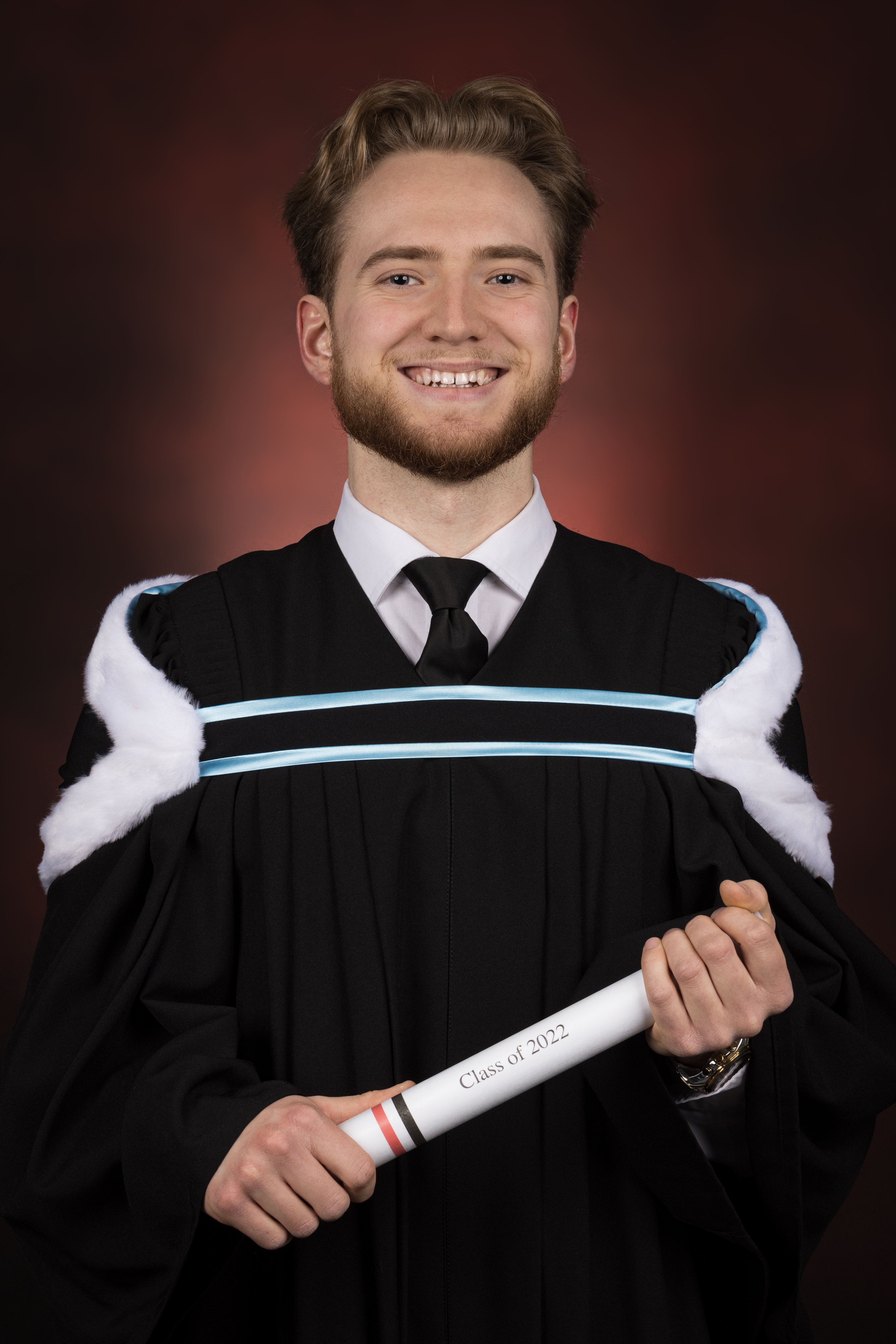
Cognitive Science Ph.D. student at Rutgers University. Host of the No Prerequisites podcast.
Currently: Writing my masters...
About
esc closes · ← → between sections
Research interests
I am a 2nd year Cognitive Science Ph.D. student, supervised by Prof. Jacob Feldman. Together we will be studying the nature of perception by running categorization experiments. These experiments are focused on how feature learning influences categorization, and what is the relationship between mutual information and categorization? In addition to focusing on the human-side of learning, I will be applying this work to the field of robotics. Indeed, this work does not only apply to humans, and the first two years of my Ph.D. will be focusing on how human feature learning can be applied to the field of Robotics, as it is a key component to giving Robots "human-like" vision. More details can be found in the Research section.
Personal interests
Aside from research, my passions lay in exercise, reading, music exploration, and podcasting. I lift weights no less than six times a week, run at least once a week, and if I can, practice Brazilian Jiu-Jitsu. Fitness is a central part of my routine, and I find it a necessary component of my lifestyle. As for my reading habits, I try to read at least 1 scientific paper a day and read parts of book chapters before bed. I did not dedicate much time to reading until my later teenage years and so I spend more time reading to make up for this (perceived) deficit. As for my passion for music, it is virtually endless, and I love to expand my knowledge of genres & subgenres in addition to seeing live music as much as possible! Lastly, I run my own academic podcast where I interview experts in various fields. Not only do I love preparing for the conversations I record, but I love the artistic component behind video-editing and creating my own digital presence.
Getting in touch
I am currently living in New Brunswick, New Jersey, and you can email me at robert.contofalsky@rutgers.edu. Should you opt in for an in-person meet-up, you can find me at the Rutgers Psychology Building, where my office is located at room A134!
You can also find me on ORCID for a complete list of my publications and research activities.
Research
esc closes · ← → between sections
Graduate — Feldman Lab, Rutgers
Beyond Mutual Information: Does Utility Affect Categorical Perception?
Current
Categorization experiments in a novel 2D feature space, with Prof. Jacob Feldman.
Currently, I am working on replicating a 2021 study on Mutual Information and Categorical Perception, where it was discovered that "the magnitude of improvement in perceptual discrimination of each feature is proportional to the mutual information between the feature and the category variable". In this study, we are investigating how perceptual discrimination of shapes improves after learning, with improvements being proportional to the mutual information between the shapes' features and their categorical relevance, as defined by their position in a novel 2D feature space. Once (hopefully) replicated, we will expand the scope of the study. Once the study is available online, it can be found in this section!
This is connected to my robotics research as well. A significant portion of robotics research is dedicated to programming vision to these machines, and feature detection is a key component to making their vision functional and similar to ours. For instance, a 2019 study on monocular camera-based fruit counting and mapping demonstrated that by using semantic data association, a robot was able to achieve highly accurate fruit detection and counting, showcasing that feature association methods significantly improved mapping precision. As such, the work I do with Prof. Feldman has broader applications beyond understanding human feature learning: it also improves robot feature learning, as both rely on detecting, categorizing, and associating features with relevant data to improve perception and decision-making in novel environments.
Throughout my undergraduate degree, I volunteered in various labs and wrote three thesis papers across a broad range of topics in psychological research. Within two years, I worked in the McGill Human Motivation Lab, McGill University Health Centre, Communication and Consciousness Lab and the MOGILab. Each of these labs granted me invaluable opportunities to satisfy my curiosity for intellectual pursuits in research, as well as expand my expertise within the domains of human behaviour, cognitive science, and neuroscience. Each principal investigator carried a unique perspective on how to conduct and interpret research that I carry with me to this day. As cliché as it may sound, without them I would not be where I am today, pursuing a career in research. The papers themselves live in Writing.
Writing
esc closes · ← → between sections
In this section I go through the three undergraduate theses I wrote, as well as selected essays. If you have any questions about the samples provided, please do not hesitate to reach out — I would be delighted to answer them!
Undergraduate research papers
For my first thesis, I investigated the psychological effects of the COVID-19 pandemic on university students from a Self-Determination Theory perspective, under the supervision of Dr. Richard Koestner. We used a 6-wave longitudinal design (n = 379) to examine how needs satisfaction and depressive symptoms manifested throughout the academic year. Our results demonstrated that the initial Covid lockdowns placed incredible amounts of stress on students, which stymied their psychological needs from being satisfied by a significant margin. Consequently, this also exacerbated any depressive symptoms present within our sample, and we found a strong association between the degree that psychological needs were thwarted and the rise in depressive symptoms. Ultimately, this thesis became my first publication: read it here.
Not long after, I joined Dr. Stevan Harnad's lab and wrote a cognitive science paper about a pilot project examining how/if humans can learn auditory categories through supervised learning. Excitingly enough, our preliminary results were statistically significant, and we demonstrated that our categories are learnable from our sample of 35 participants.
In my senior year, I worked on a very technical neurochemical project with Dr. Aleksandrina Skvortsova under the supervision of Dr. Jeffrey Mogil, investigating the nocebo hyperalgesia effect and its underlying neurochemistry. You can read my final draft here. This work has since been published in Nature Communications (2026): DOI.
Selected essays
01
European Intellectual History
Undergraduate essay — Cyril, Methodius & the Slavic writing system
My last undergrad paper is a very different topic compared to my psychology-based research papers, as it was written for my history minor. This was my final essay for the seminar class "European Intellectual History", where I investigated how medieval translators carried and maintained significant medieval history, culture, politics, science, and medical knowledge. For my topic, I chose to write about the Slavic disciples, Cyril and Methodius, and the linguistic, theological, and political journey they embarked on when creating a writing system for the Slavs.
In 2018, for my last Social Science course in CEGEP, I wrote a final paper on the necessity of Freedom of Speech. While the writing is sloppy, and the arguments might even seem a bit disjointed at times, I can say with confidence that this was the paper that solidified my desire to remain in academia. Being from a democratic country, it is almost second nature to believe in Free Speech. However, to craft an argument in favour of free speech is not easy. Because the easiest counter argument to Free Speech is that it might be preferable to control speech. Letting it be free means that hateful and dangerous ideas are no longer punitive, but potentially validated. Therefore, it is better to just control the bad ideas; this is a far easier argument to make than the converse of non-regulation. In addition, it seems trivial/lazy to just say that things should be free, things will just sort themselves out. Anyone who has gone through some type of personal tragedy would understand that someone insulting or making fun of their personal tragedy when it is in its most painful state would prefer some type of restraint on the comments they receive during this time instead of letting anything go. As such, I discovered that in fact, it was very hard to make the argument FOR Free Speech. Because when you argue for Free Speech, you are not making an argument for how we organize our conversations personally, but you are making an argument for how a society ought to organize itself. So, to make this argument I had to dive into the deep ends of many topics. The first was the history of speech; where does it come from. Second, was the psychology of free dialogue and the nature of speech. And third, the downstream legal effects of free speech, as to have true freedom of speech, every other institution has to support this law, because Free Speech is not free unless every other law respects this basic one. This is an incredible amount of things to talk about in 15 pages; there are entire books dedicated to each of these topics, and I had to find a way to combine them in a way that is succinct, cohesive, and convincing. This was not easy, and it took me months to get this going, which is not something any CEGEP student should do. (Which I believe reflects my willingness to dive deep into extremely complex topics, something that an academic faces on the daily). I ended up getting a 97 on the paper, and I felt like I had learned a great deal about the world in that journey. Lastly, what I find most rewarding about this early work is that I independently discovered and synthesized perspectives from multiple disciplines — marketplace of ideas theory, democratic philosophy, linguistics, and psychology — creating an interdisciplinary argument for free speech without yet knowing these were established fields of study, demonstrating the kind of integrative thinking that would later define my academic approach.
Uniting Physics and Perception: How Constructal Law Governs Human Categorization Contofalsky, R. (2025) 15th Constructal Law Conference (CLC2025), Miami, FL, United States [video][certificate]
Invited talks
Estimating The Reproducibility Of Psychological Science Contofalsky, R. (2024) Tanenbaum Open Science Institute (TOSI) ReproducibiliTea Journal Club, Montreal, Canada
Posters
Beyond Mutual Information: Does Utility Affect Categorical Perception? Contofalsky, R., & Feldman, J. (2025) Rutgers Annual Cognitive Science Forum [poster]
Better anticipating the geographies of robotic and autonomous systems Andrews, C., Angne, H., Contofalsky, R., Dana, K., Padilla Garcia, R., & Wilson, A. (2025) American Association of Geographers (AAG) 2025 Annual Meeting, Detroit, MI, United States
Nocebo Hyperalgesia In Male but Not Female Mice Is Mediated by CCK-B Receptors Skvortsova, A., Carrier, S., Contofalsky, R., & Lima V. L. (2022) IASP 2022 World Congress on Pain, Toronto, Canada
Departmental
Beyond Mutual Information: Does Utility Affect Categorical Perception? Contofalsky, R., & Feldman, J. (2025) Rutgers Data Blitz[video]
Beyond Mutual Information: Does Utility Affect Categorical Perception? Contofalsky, R., & Feldman, J. (2025) Rutgers Spring Cognitive Fest
No Prerequisites
esc closes · ← → between sections
No Prerequisites
With Robert Contofalsky
Expert conversations with no barrier to entry — every episode comes with receipts.
Up nextJenin Younes: 1st Amendment Litigation · August 2026 / Amritpal Singh: Abstract Reasoning · editing / Tania Lombrozo · November 2026
Episode Archive
All 15 episodes ↓
Guest Wall
Steven Pinker
Cognitive Psychology
Adrian Bejan
Thermodynamics
Elkhonon Goldberg
Neuropsychology
Stevan Harnad
Cognitive Science
Jeffrey Mogil
Pain Neuroscience
The Mission
The best ideas usually sit behind gates — jargon, paywalls, an assumed decade of reading. No Prerequisites opens them. Robert Contofalsky sits down with the people who wrote the textbooks and asks the questions a curious outsider would actually ask.
And because claims deserve sources, every episode ships with its receipts: the papers, books, and studies behind the conversation, ready to scan.
PREREQ: NONE
Be a Guest
Spent a career going deep on something most people have never heard of? The chair across from Robert is open.
Guest applications are reviewed case-by-case based on fit with the show's mission.
Citation
1. Steven Pinker, Enlightenment Now, p. 238
Yet the single best predictor of emancipative values is the World Bank's Knowledge Index, which combines per capita measures of education (adult literacy and enrollment in high schools and colleges), information access (telephones, computers, and Internet users), scientific and technological productivity (researchers, patents, and journal articles), and institutional integrity (rule of law, regulatory quality, and open economies).